Why a more elevated lifestyle doesn't always require buying something new.
There is a particular kind of excitement that comes with finding something you absolutely love.
Maybe it's a beautifully tailored jacket, a piece of artwork that seems made for your home, or a handbag you've admired for months. You imagine how you'll wear it, where you'll display it, or how much you'll enjoy finally having it.
The purchase feels intentional. Perhaps you even spend a little more than you originally planned because you know it's something you'll appreciate for years.
Then, somewhere between bringing it home and getting accustomed to seeing it every day, the excitement begins to fade.
The jacket joins a collection of other jackets. The artwork becomes part of the background. That beautiful handbag finds a permanent home on a closet shelf, occasionally emerging when you remember you own it.
Before long, you're browsing for something new.
It's an interesting habit, particularly considering how much time and money we invest in creating homes, wardrobes, and lifestyles that reflect our tastes.
We work to acquire things we love, only to become so familiar with them that we forget to enjoy them.
When Beautiful Things Become Ordinary
Part of the appeal of something new is the attention we give it.
A new piece of furniture changes how we see a room. Fresh clothing makes familiar outfits feel different. Even a small decorative purchase can make us appreciate a space we've lived in for years.
Eventually, though, the novelty wears off.
The furniture is still beautiful. The clothing still fits. The artwork hasn't become less interesting. We've simply stopped noticing it in quite the same way.
This is a natural part of becoming accustomed to our surroundings, but it can create an expensive cycle if we continually mistake familiarity for dissatisfaction.
Consider how often we decide a room needs updating when nothing is actually wrong with it.
Perhaps the space has looked the same for several years, and we're ready for something different. That desire is perfectly reasonable. Personal taste evolves, and our homes should evolve with us.
But sometimes what we really want isn't a new sofa, dining table, or collection of accessories.
We want the feeling of seeing our space with fresh eyes.
Rearranging furniture, changing the lighting, bringing artwork into another room, or simply removing a few unnecessary objects can make familiar surroundings feel surprisingly different.
The goal isn't to avoid purchasing anything new. It's to recognize that a fresh experience doesn't always require a fresh expense.
The Closet Full of Nothing to Wear
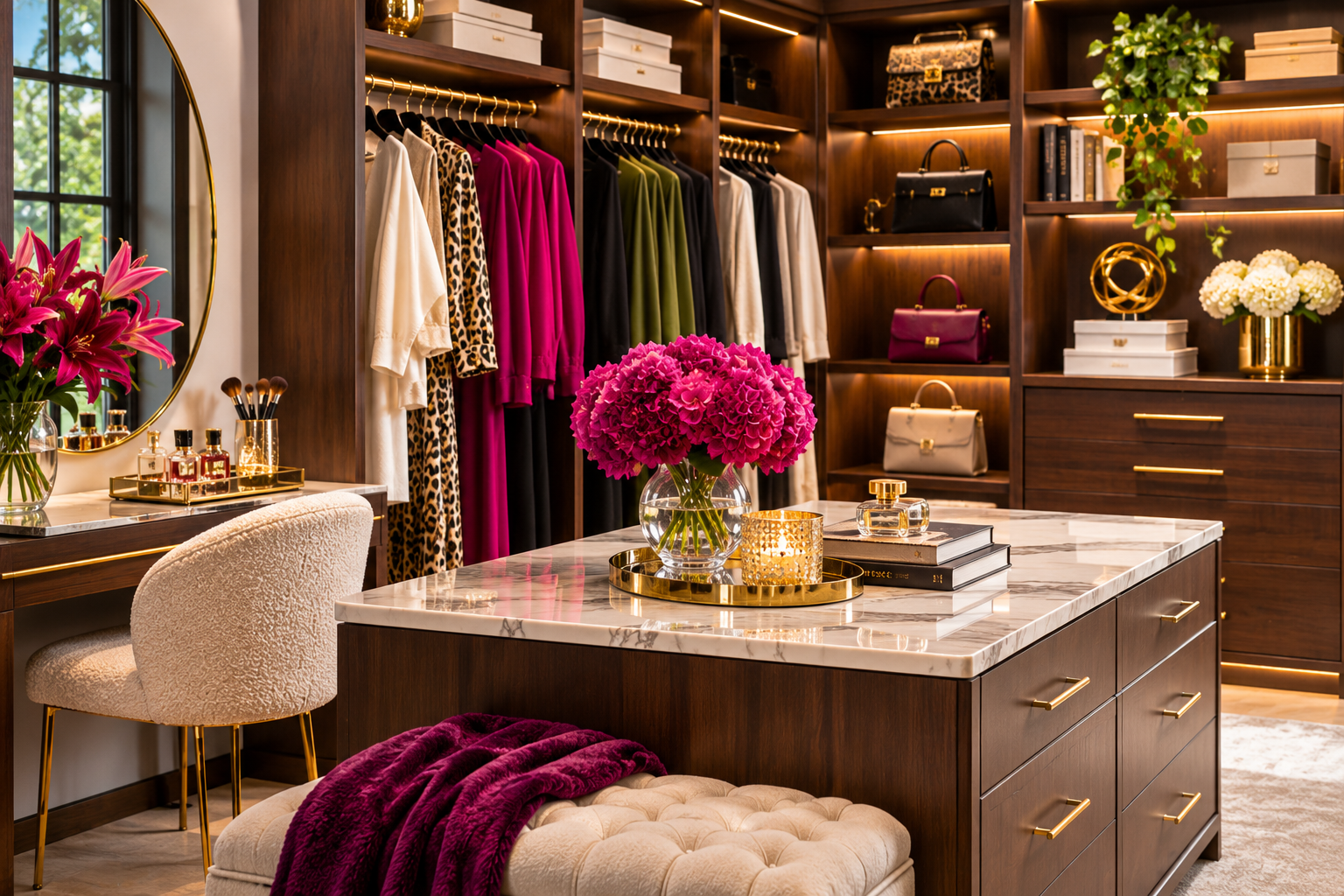
Few places illustrate our complicated relationship with possessions better than a closet.
Somehow, it's entirely possible to have a wardrobe filled with clothing and still announce that we have absolutely nothing to wear.
The statement is rarely accurate, of course.
What we usually mean is that nothing feels particularly exciting, appropriate for the occasion, or consistent with how we want to present ourselves that day.
Fashion makes this especially complicated because trends move quickly. Colors, silhouettes, accessories, and styling rules change from season to season, creating the impression that our wardrobes require constant attention.
Yet personal style has never been exclusively about owning the newest pieces.
A beautifully fitted jacket can remain relevant for years. Well-made shoes, thoughtfully chosen accessories, and clothing that complements your lifestyle often have more lasting value than whatever happens to be popular this month.
Sometimes the most interesting outfit is already hanging in your closet, waiting for you to wear it differently.
Try pairing pieces you wouldn't normally combine. Give an overlooked accessory another opportunity. Take something you've been saving for a special occasion and incorporate it into an ordinary day.
That beautiful blouse doesn't need to wait for an invitation. Neither does the watch you love, the jacket that makes you feel especially polished, or the shoes you keep admiring but rarely wear.
Of course, if the shoes are uncomfortable enough to make you question your life choices, perhaps those can remain decorative.
Appreciation doesn't require unnecessary suffering.
Stop Saving Everything for Someday
Many of us have a collection of things reserved for occasions that apparently never arrive.
The expensive candles we don't want to burn. The beautiful dishes that remain carefully stacked in a cabinet. The luxurious bedding waiting for the perfect time to be used. The perfume saved for evenings out, even though we genuinely enjoy wearing it.
Somewhere along the way, we began treating our favorite possessions as though using them would diminish their value.
And technically, it might.
Candles burn down. Fabric wears. Perfume eventually runs out. Beautiful dishes can break.
But isn't experiencing those things part of why we wanted them in the first place?
There's nothing wrong with preserving meaningful heirlooms or taking special care of valuable possessions. Certain items deserve thoughtful handling, particularly when they carry family history or sentimental significance.
Still, there's a difference between protecting something important and never allowing yourself to enjoy it.
A beautiful table setting can make an ordinary dinner feel special. Fresh flowers in a favorite vase can change the atmosphere of a room. Wearing a cherished piece of jewelry on a regular Tuesday doesn't make it less meaningful.
It may actually make your everyday life a little more enjoyable.
Special occasions are wonderful, but they shouldn't have exclusive rights to the things we love.
Your Home Doesn't Need to Look Like Everyone Else's
One of the challenges of creating a personal environment today is the sheer volume of inspiration available.
Beautifully designed homes appear everywhere. Social media offers endless examples of perfectly styled kitchens, dramatic living rooms, elaborate closets, and carefully coordinated interiors.
It's easy to appreciate those spaces while gradually becoming dissatisfied with our own.
Suddenly, furniture we once loved looks outdated. A color scheme that suited our personality begins to feel less appealing because someone has declared another shade the new essential neutral.
The temptation to start over can be strong.
But an elevated home doesn't have to follow every design trend to be beautiful.
Some of the most interesting interiors are those that reflect the people who live in them. A collection of books gathered over decades, artwork purchased during memorable travels, furniture inherited from family, and objects chosen simply because someone loved them can give a home character that no coordinated shopping list can reproduce.
Those pieces tell a story.
Refinement isn't necessarily about making everything match or replacing anything that no longer appears in design magazines.
Sometimes it's about understanding what deserves a place in your home and allowing those things to shine.
A thoughtfully arranged room filled with meaningful possessions can feel far more luxurious than an expensive space that looks impressive but reveals nothing about the person living there.
Quality Is More Than a Price Tag
We often associate luxury with expensive purchases, exclusive brands, and beautifully packaged products.
While craftsmanship and quality materials can justify higher prices, cost alone doesn't determine how much value something adds to our lives.
A well-made coat worn for ten years may provide far greater satisfaction than several expensive purchases that rarely leave the closet. A favorite chair doesn't become less comfortable because a newer design appears in a showroom.
Even something relatively inexpensive can feel luxurious when it performs beautifully, suits your taste, and becomes part of a life you genuinely enjoy.
The real value of an item often emerges through use.
Consider cost per wear when evaluating clothing, or how frequently you enjoy a particular household purchase. Think about whether something serves a meaningful purpose, creates pleasure, or improves your daily experience.
An expensive object that spends most of its life in storage may offer less value than a modest purchase you appreciate every day.
Of course, there are exceptions. Art, collectibles, heirlooms, and other possessions may hold financial or sentimental value independent of how frequently they're used.
The point isn't to assign every belonging a productivity requirement.
It's to become more conscious of what makes something valuable to you.
Rediscover Before You Replace
Before deciding you need something new, take a little time to explore what you already own.
Not as a punishment or an exercise in denying yourself pleasure, but as an opportunity to rediscover things that once caught your attention.
Open the cabinet that holds your favorite dishes. Look through the clothing you've forgotten about. Revisit the books you purchased with every intention of reading. Take another look at the artwork, accessories, and decorative pieces that have quietly become part of your surroundings.
You may discover that some items no longer suit your life.
That's useful information, too.
Our needs and preferences change. Keeping everything simply because we once spent money on it isn't necessarily a sign of appreciation. Sometimes the best decision is to donate, sell, or pass along possessions that someone else could enjoy.
But you may also find things that still bring you pleasure.
A jacket that looks wonderful with something you recently purchased. A decorative piece that would be perfect in another room. A set of glasses that could make your next dinner gathering feel a little more special.
Rediscovery can be surprisingly satisfying.
And unlike another shopping trip, it doesn't require waiting for a delivery.
The Luxury of Being Content With Your Taste
There's a quiet confidence that comes from knowing what you like without constantly needing outside confirmation.
You don't have to replace your wardrobe because a new trend appears. Your home doesn't require a complete redesign whenever another aesthetic becomes popular. A possession doesn't lose its appeal simply because someone else has purchased a newer version.
Developing personal style means learning to distinguish between genuine inspiration and the pressure to keep up.
That doesn't make change unnecessary.
Fashion should be enjoyable. Decorating can be creative and rewarding. Discovering something new that genuinely improves your life is part of the pleasure of having the resources and freedom to make those choices.
The difference is whether you're making them because they reflect your evolving preferences or because you've become uncomfortable with what you already have.
An elevated lifestyle should feel personal, not like an endless assignment to acquire better things.
Appreciating What You Have Is a Style Choice, Too
Gratitude is often discussed in terms of relationships, opportunities, health, and personal accomplishments. Rarely do we consider how it might influence our relationship with the physical things surrounding us.
Yet our possessions represent choices, experiences, memories, and sometimes years of hard work.
The home you've furnished, the wardrobe you've developed, and the objects you've collected may include things you once hoped you'd be able to afford.
There's something worthwhile about recognizing that.
Not every purchase will remain meaningful forever, and there's no reason to pretend our tastes should never change. We can appreciate what we own while remaining open to new discoveries.
But perhaps the next time you feel the urge to upgrade something, it's worth asking whether the item has truly stopped serving you or whether you've simply stopped paying attention to it.
Enjoy the beautiful things you've chosen. Wear the clothes that make you feel good. Use the dishes, light the candles, and create occasions worthy of the things you've been saving.
Let your surroundings reflect the life you're actually living, rather than one you're continually preparing to enjoy someday.
Because sometimes the most sophisticated upgrade isn't bringing something new into your life. It's learning to appreciate what was already there.